
A New Mission for Mission Bay:
Leeloo Gilet
Envisioning a Public & Resilient Waterfront on the South Shore

SCASLA Achievement Award
The judges highlighted the project’s strong research and analysis, with clear concepts and diagrams that were easy to understand. The evocative “Woven Basket” theme and precedent images brought a strong sense of place, while creative ideas like the tower walk stood out, even if they felt grand in scale. The sections and visuals were compelling, and the narrative showed thoughtful intent. Overall, a beautifully presented project with strong vision and creativity.
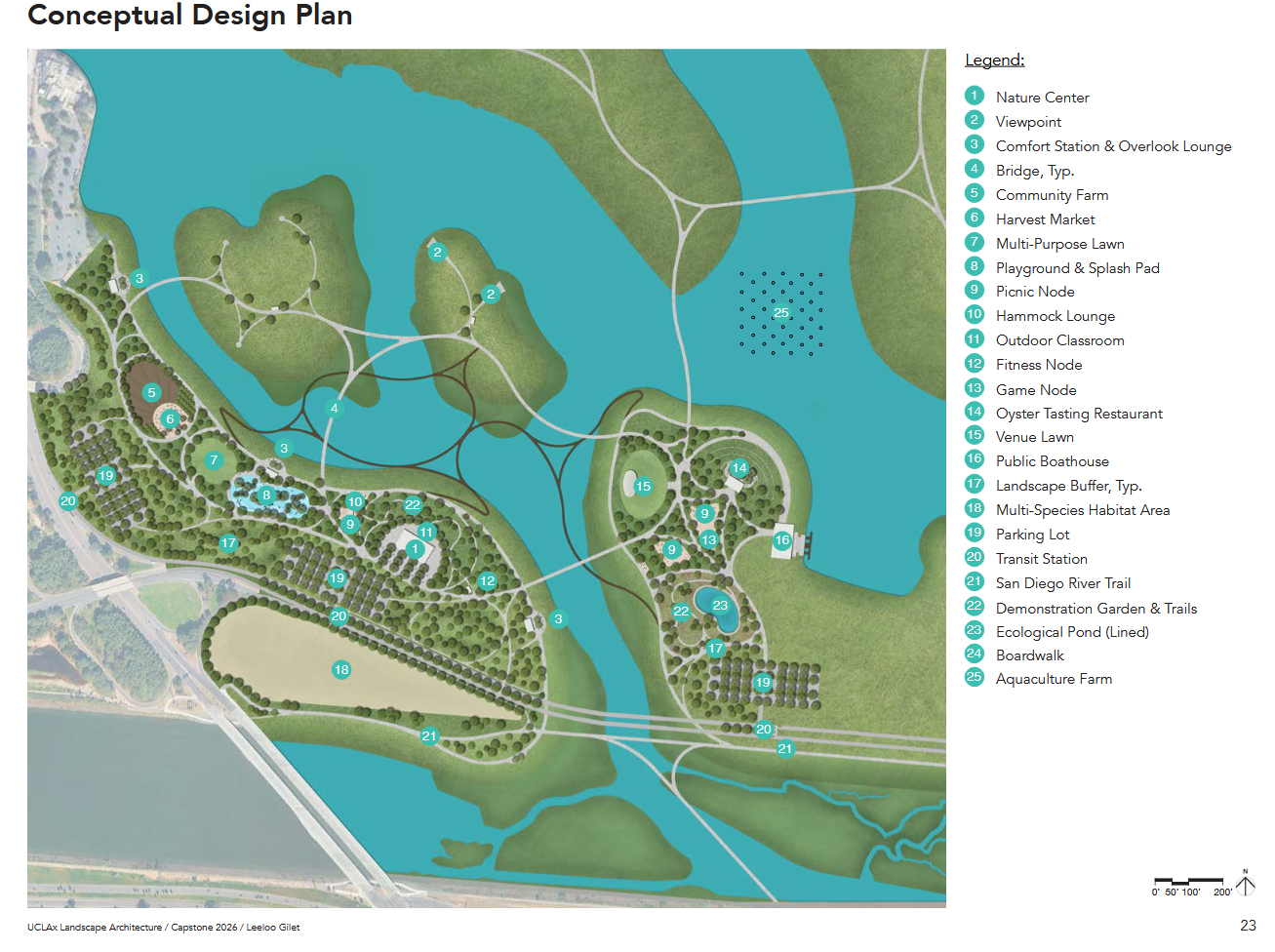
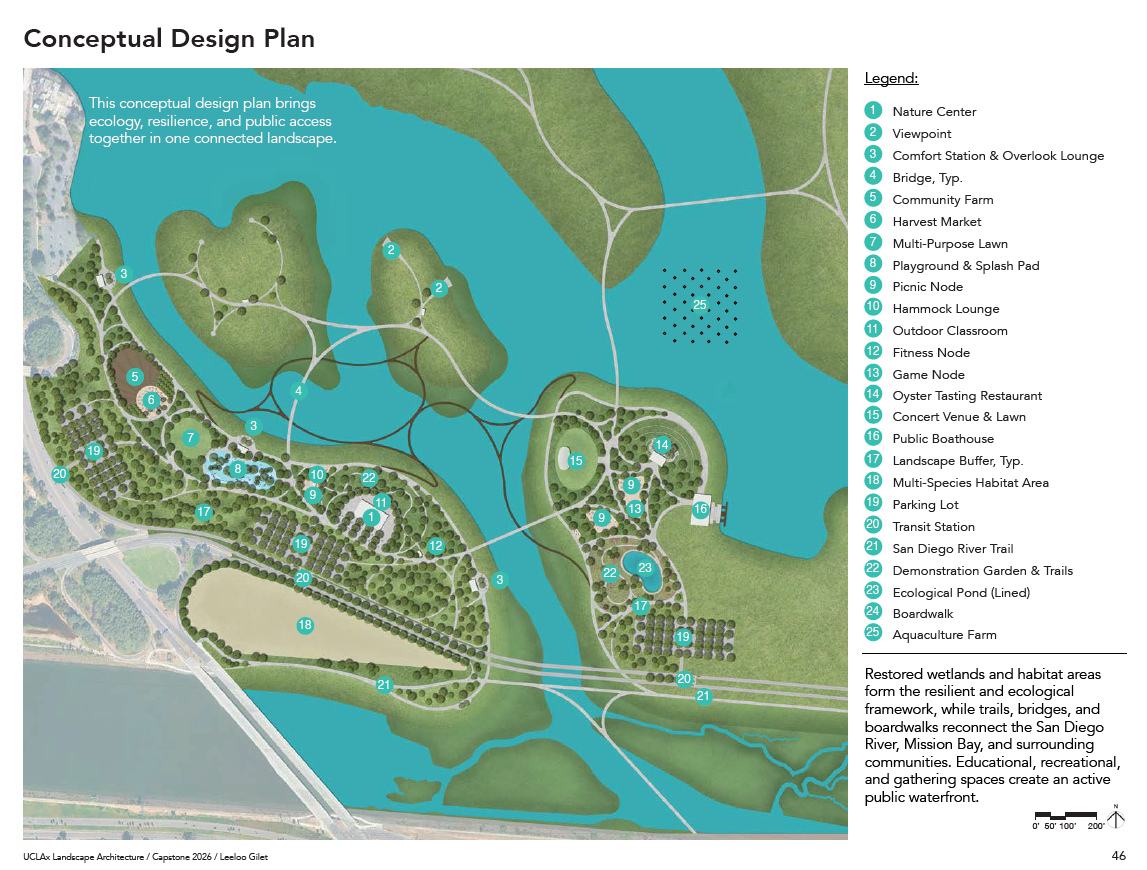
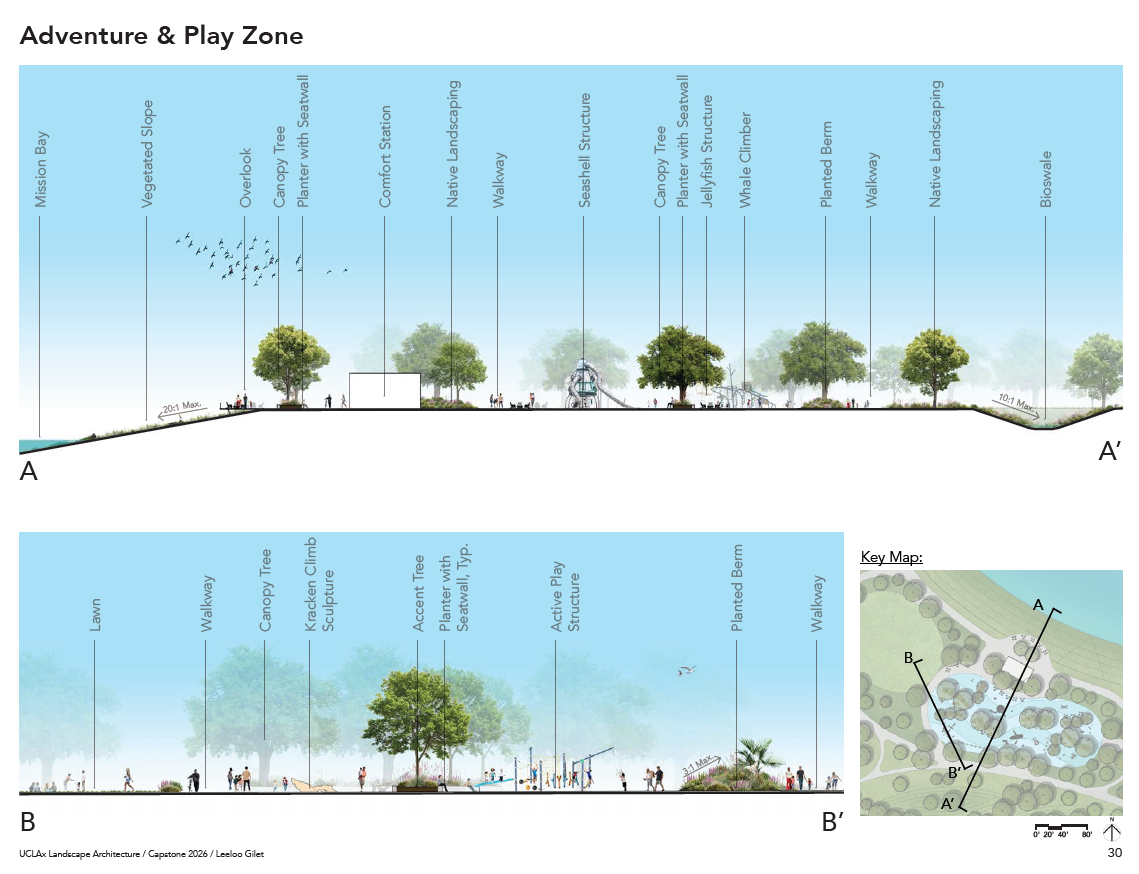
The project presents a long-term vision to transform the San Diego’s Mission Bay South Shore, including the SeaWorld site following its lease expiration in 2048, into a resilient, publicly accessible waterfront park. Currently defined by car-centric infrastructure, degraded mudflats, and hardened, flood-prone edges, the site sits at the critical interface of the San Diego River and Mission Bay. Guided by the Waterfront Edge Design Guidelines (WEDG), the proposed design directly addresses key regional issues, including climate change, habitat fragmentation, and equity.
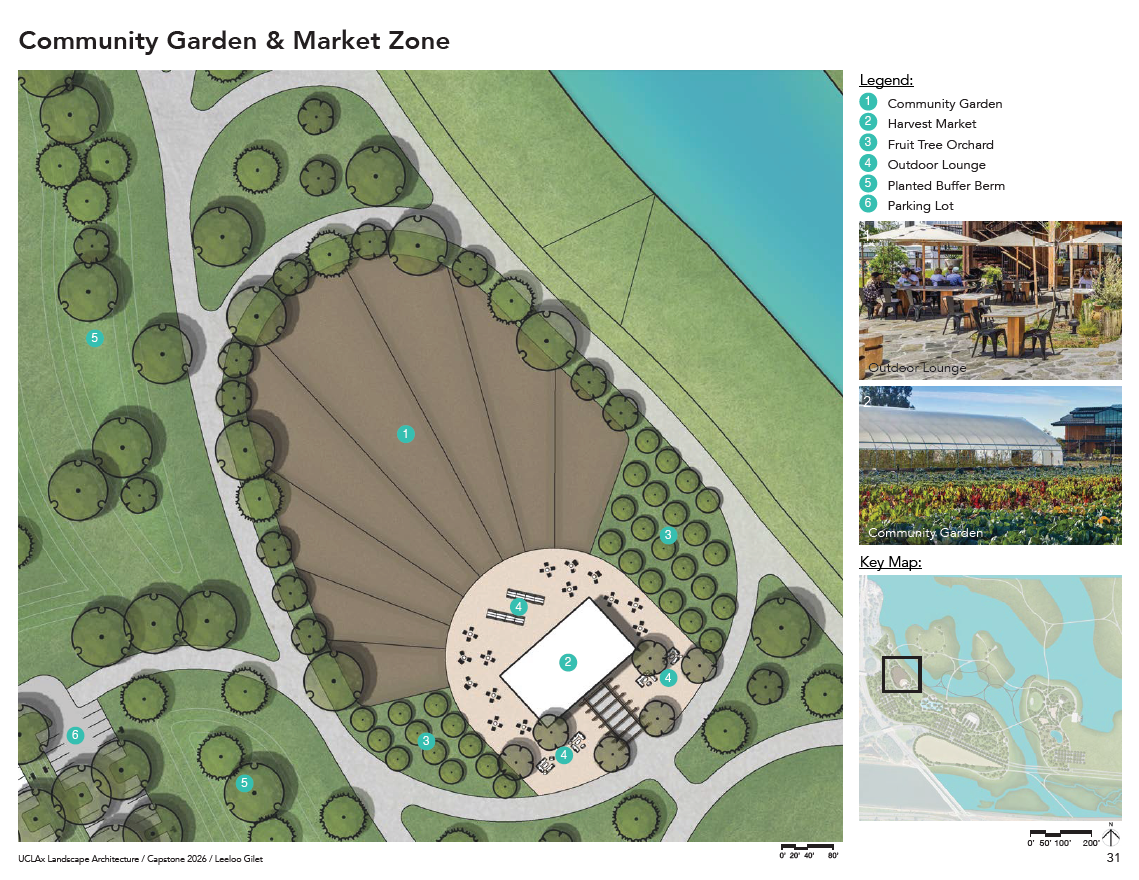
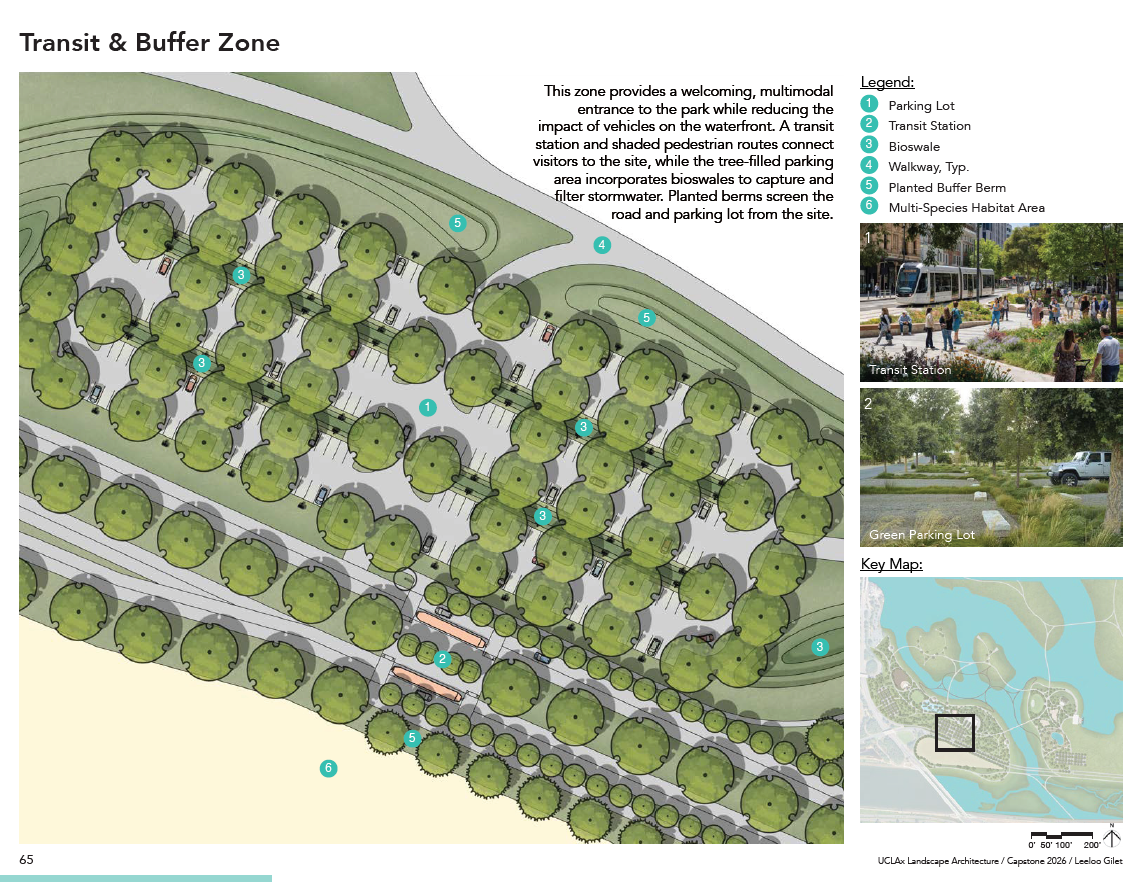
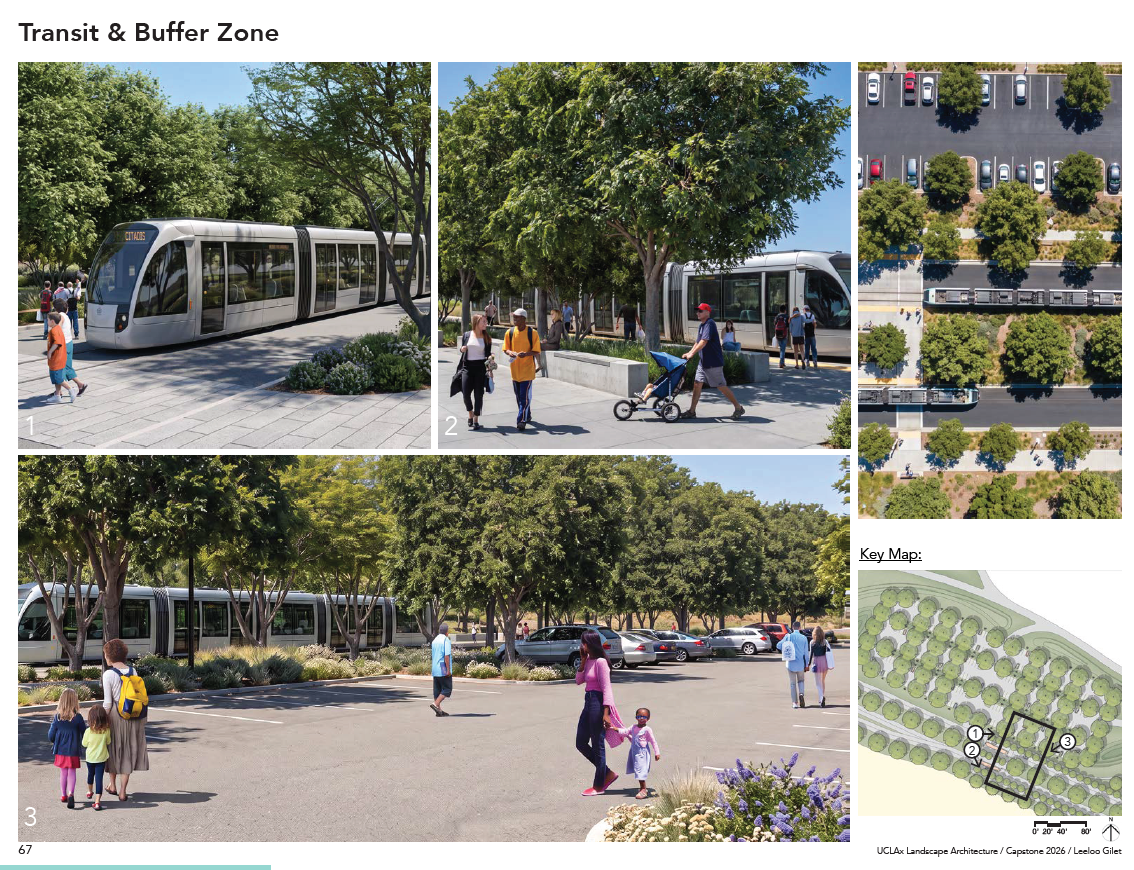
To build climate resilience, the project re-grades steep shorelines to absorb sea-level rise and replaces vast surface parking lots with native tree canopy to mitigate urban heat island effects. Ecological restoration is achieved by re-establishing vital tidal linkages, constructing living shorelines, creating mesotidal wetlands, and integrating aquaculture systems for bio-filtration. Furthermore, the plan dramatically enhances public access by eliminating privatized land barriers, introducing multi-modal circulation with dedicated pedestrian and cycling pathways, adding non-motorized boat launches, and providing universal ADA-compliant recreational spaces for the community.
About

Leeloo Gilet
Leeloo Gilet is passionate about designing landscapes that celebrate biodiversity, cultural identity, and connection to place. After completing her bachelor’s degree in philosophy at Duke University, she earned a certificate in Horticulture and is finalizing a certificate in Landscape Architecture from UCLA. Her multicultural and interdisciplinary background shapes her understanding of landscape as a medium for cultural expression and collective belonging. Guided by a sense of responsibility to both human and non-human communities, she is drawn to work that supports ecological resilience and more just, inclusive urban futures.
Her design ethos is grounded in the belief that landscapes can heal—ecologically, culturally, and spiritually. She is especially interested in how Indigenous ecological knowledge can inform place-based design and deepen our relationship to land, while supporting climate-adaptive strategies like blue-green infrastructure, urban agriculture, and habitat restoration. Her work has been recognized with multiple SC ASLA Awards and reflects a strong commitment to ecological and social well-being.