
LANDSCAPE DESIGN 7
The Advanced Design Studio is a rehearsal for the rigors of the Capstone Project. The student explores a big idea and creates a program responding to a site (site chosen by instructor). Using the design process and site analysis, the student refines a program, selects goals and objectives, and prepares a design solution and documentation booklet. This course is a required prerequisite to the Capstone Proposal and Capstone Project.
Advanced Design Studio
JUDGES:
Allen Compton
Jared Edgar McKnight
INSTRUCTOR: Jessie Corea
SCRIBES:
Ryan O’Leary Jones
Tom Galassi
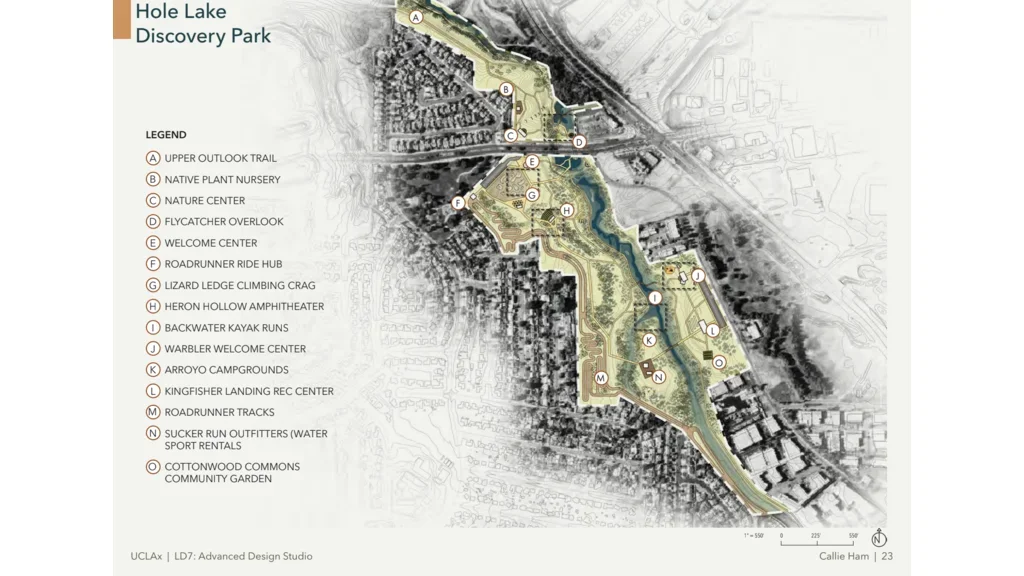
Hole Lake Discovery Park
Callie Ham

SCASLA Excellence Award
Judges loved the site plan, with a well conceived booklet that made it easy to understand the students point of view. They praised the Climbing Experience concept development and beautiful perspectives.
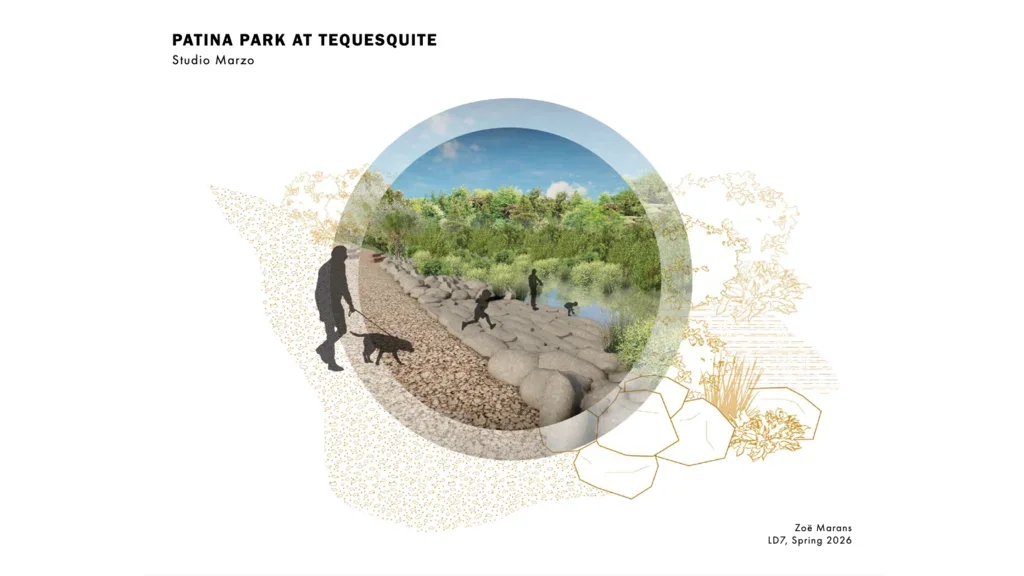
Patina Park at Tequesquite
Zoë Marans
SCASLA Excellence Award
Judges praised the well rounded research, with a professional, high level of synthesis and a very ambitious project with consistently excellent graphics.
Patina Park at Tequesquite transforms over 200 acres of the former Tequesquite landfill and surrounding area along the ecologically sensitive Santa Ana River in Riverside into a nature park that honors the deep history of local cultures. Inspired by the Japanese art of 'Kintsugi' that repairs broken pottery with gold lacquer, my design aims to tell the layered histories of the site, from pristine wilderness through fragmentation, illustrating how the site is beautiful because of its history, not in spite of it. Rooted below Mt Rubidoux, which is one of the most spiritual landmarks for the four indigenous tribes here, the central experience is a cultural walking journey through the past and ending at an elevated lookout over the river towards the future. The design uses nature-based solutions to manage stormwater, conserve critical habitat, and encourage dialogue about the future of human-wilderness interactions.
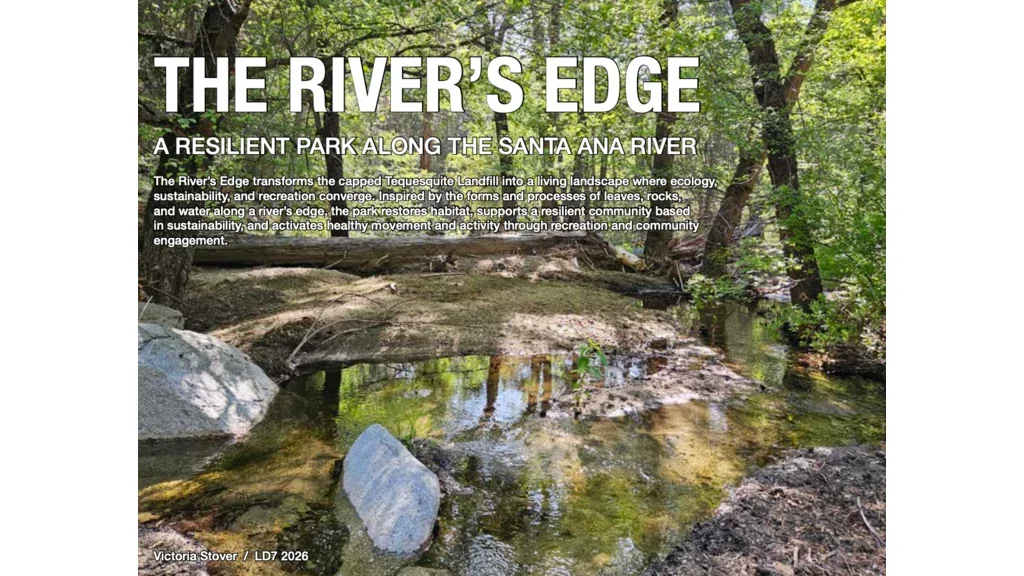
The River’s Edge
A RESILIENT PARK ALONG THE SANTA ANA RIVER
Victoria Stover

SCASLA Excellence Award
Judges commended the student for an excellent concept, with an interesting program and a site plan with a strong through line.
The River’s Edge transforms the capped Tequesquite Landfill into a living landscape where ecology, sustainability, and recreation converge. Inspired by the forms and processes of leaves, rocks, and water along a river’s edge, the park restores habitat, supports a resilient community based in sustainability, and activates healthy movement and activity through recreation and community engagement.
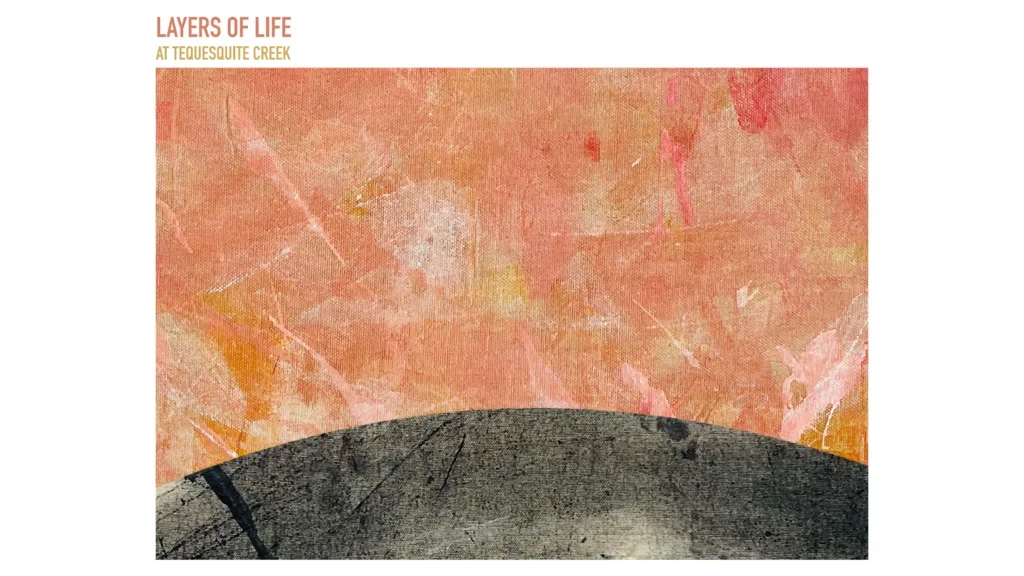
Layers of Life at Tequesquite Creek
Josep Ferrer
Feasibility study confirmed it is possible to construct structures on landfill cap.
Hole Lake: The Bridge
Kristin Byrd
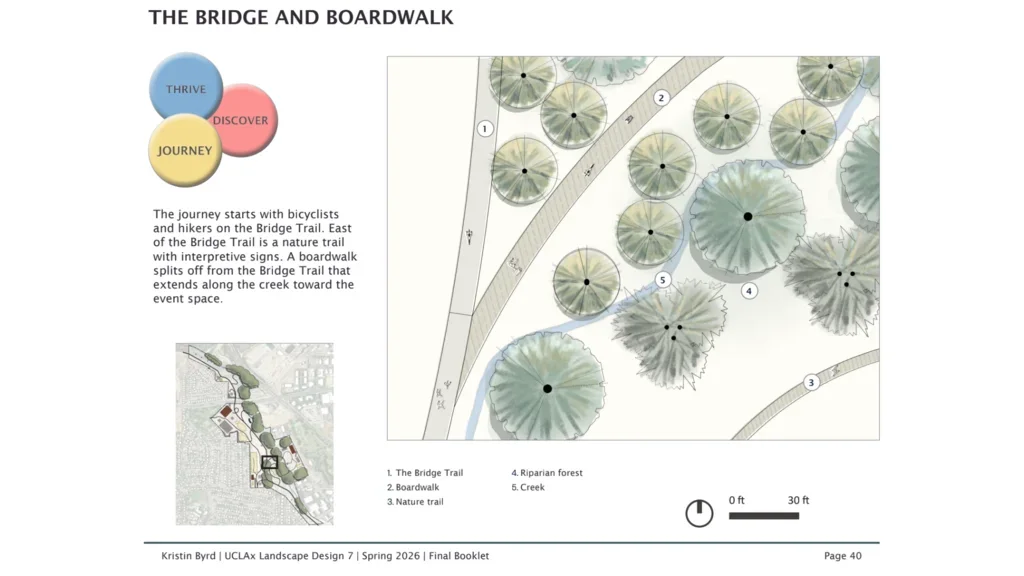
Hole Lake connects the surrounding neighborhoods to the broad expanse of the Santa Ana River and open spaces to the north. The Bridge is the thriving route that we journey through and beyond. The combined and shared use for rare species, habitat, and people creates synergies that allow visitors to better interact with and learn from nature.
A thriving restored park provides support for the bridge, where shared uses create synergies that allows people to play and discover, grow, and journey and rest along the way.
Tequesquite Landfill
Leeloo Gilet
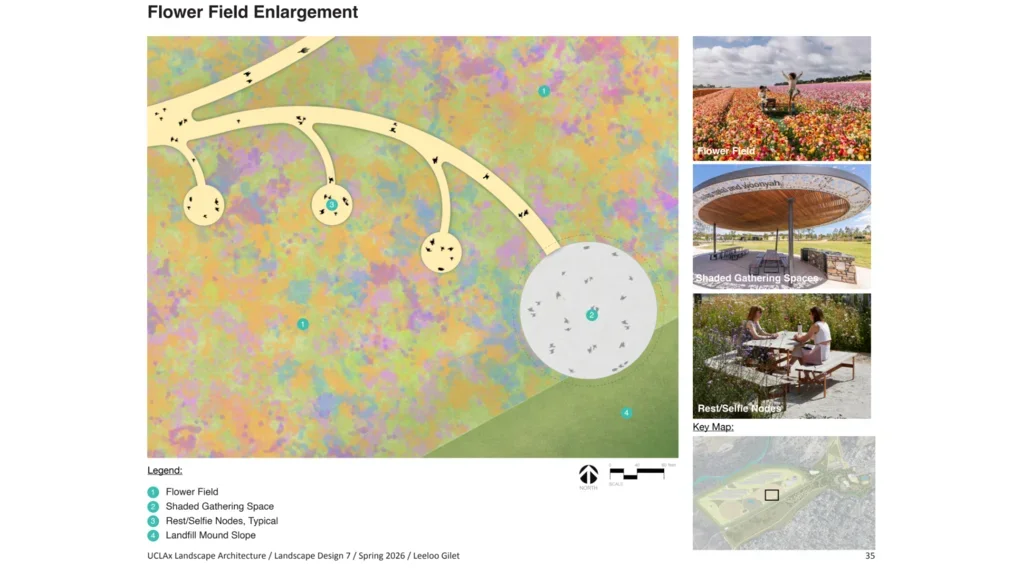
Hole Lake
Nikki Rinehart
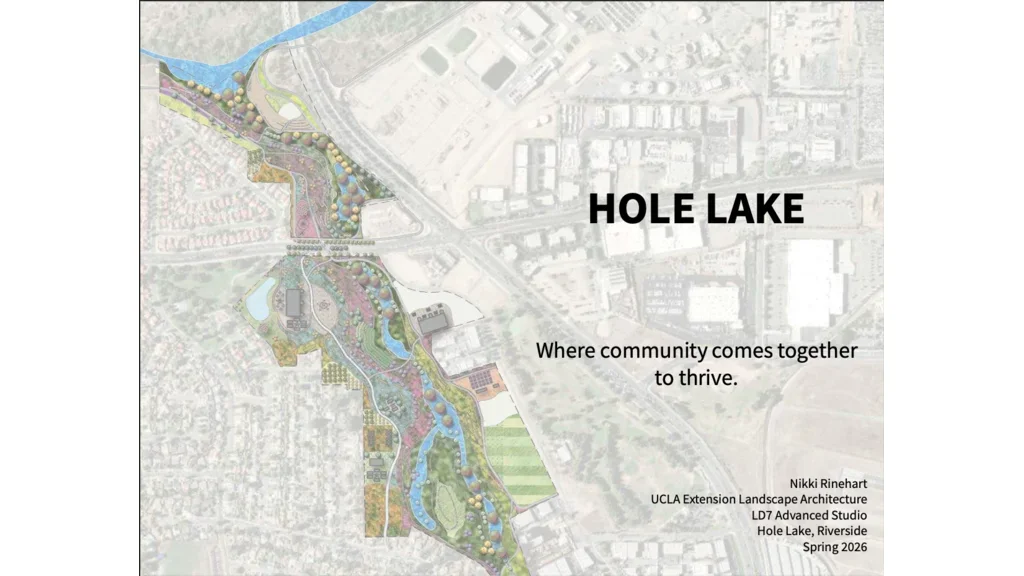
Hole Lake is a place where all community members are welcome and supported. There are many opportunities to connect to communities, learn, grow, and thrive. Simple solutions are designed to collect, clean, slow, spread, and sink rain and urban Water runoff, ensuring that we have clean and safe water in our watersheds.
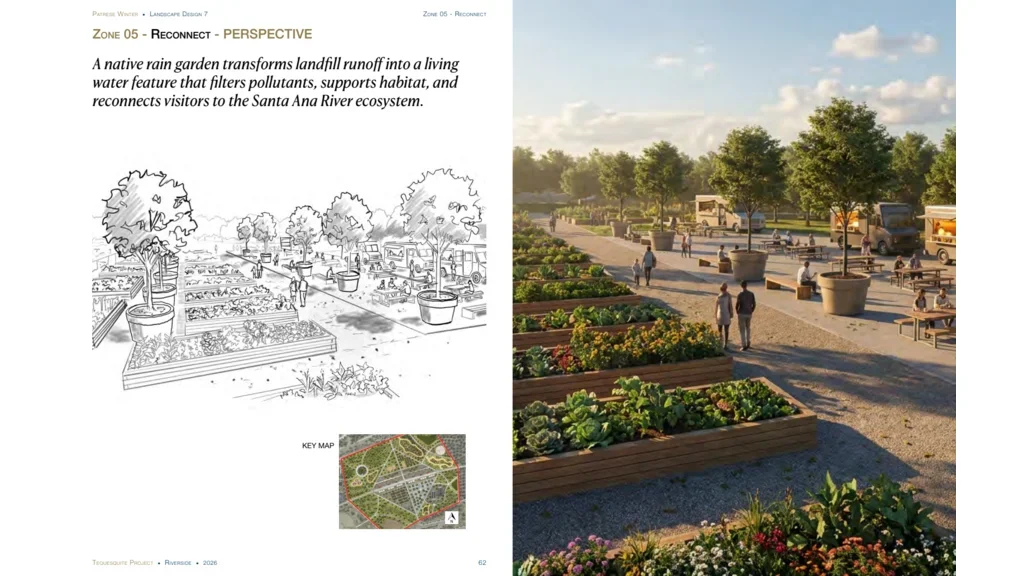
La Cicatriz
Patrese Winter
LD7: Tequesquite Landfill Redesign
Tate Tilles-Perrin
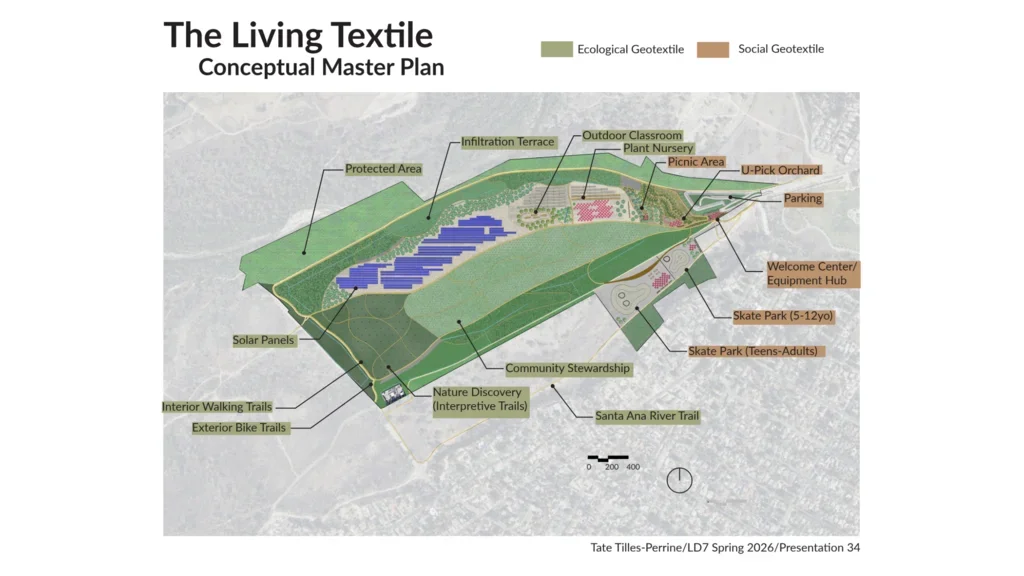
The project reinterprets the geotextile as living ecological and social infrastructure. Through layered systems of vegetation, water management, circulation, and community engagement, the landscape operates as a living fabric that activates public life, cools urban conditions, and restores ecological function.